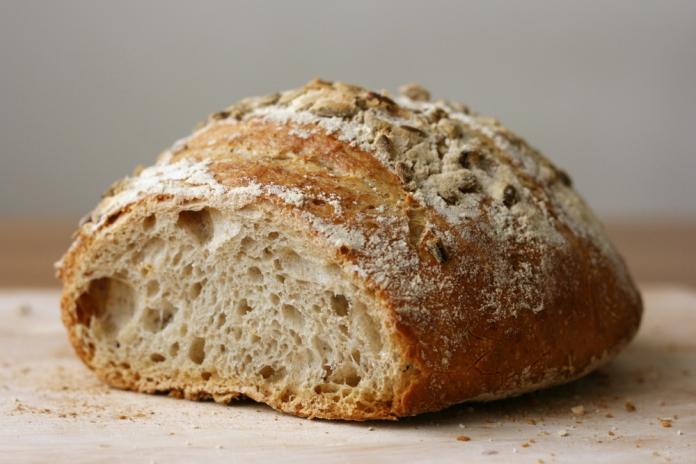
When you make the change to a low-sodium diet, one of the first things that may surprise you is the amount of salt used to make bread. It doesn’t taste salty, but the reason the amount of sodium on nutritional labels is so high is because a fairly large amount of salt is important to the rising process when using most methods of breadmaking. I’ve had very little luck by just reducing the amount of salt called for in most breadmaking recipes when I first started (trying) to make bread. After many failed attempts, I stumbled upon a no-knead recipe that does not require salt at all for the rising process. Not only that, but it’s super easy to make. No kneading or punching or poking or any other of the things you need to worry about if you’ve ever tried to make bread using traditional methods.
If you’ve never tried to make bread, you totally should! If all goes well, you’ll end up with a bread with a very crispy crust that’s much nicer than any bread you can buy in a bag from a grocery store. There’s very little effort involved on your part and I think that your chances of succeeding on your first try are pretty high. However, things can go wrong at the different stages which could lead you to baking a less than perfect bread. With all types of breadmaking, I think it’s fair to accept that you might not get it right on your first try. But don’t worry too much, because even if you don’t get a good loaf, you’ll still be able to use the remaining dough to make pizza or other bread-y things that are less fussy than bread.
The dough recipe makes a large batch which yields four small loaves of bread. You can easily halve this recipe on your first try. To make your life easier, make the dough a day before you want to bake the bread. On baking day, it’ll take about three and a half hours before you’ll be able to have your first bite.
Update: Find a revised version of bread-making in this post from Dec. 4th, 2014.

 A lick of salt